Functional training is the only part of a gym that is not bought by the piece. You buy a space in which eight people do eight different things without getting in each other's way — and the frame that holds it all together.
The functional zone is usually the first place a member goes and the last anyone draws in. It comes about by piling medicine balls and mats into a corner — and then we wonder why it looks like a storeroom.
The difference between a zone and a heap of equipment is the frame. It determines where people stand, where things hang, where things are stored and how many people fit at once.
That is why we start not from a list of tools but from the floor plan: how many metres of wall you have, whether there is a concrete floor that can be drilled, and whether the middle of the room has to stay clear.
A rule of thumb: one training station needs about two metres of free floor in front of the frame. Anything less means people will collide and the zone will empty itself.

Nobody cancels a membership because of a machine. They cancel because of waiting. The functional zone is the only part of the gym where that is solved by layout, not by buying another piece. Eight stations on one frame take more people than eight separate machines — and use half the floor.
All three do the same job — they hold equipment, provide training stations and store what is not in use. They differ in how much space they need and how much they can take.
A frame from which the straps hang, with shelves for tools. For gyms introducing a functional programme for the first time and not wanting to touch half the space.
A modular wall-based system that combines Olympic lifting, functional work and storage — and leaves the middle of the gym clear.
A system that can stand against a wall or in the middle of the room and grow from one bay to an entire zone. This is for the club that runs functional training as a serious programme.
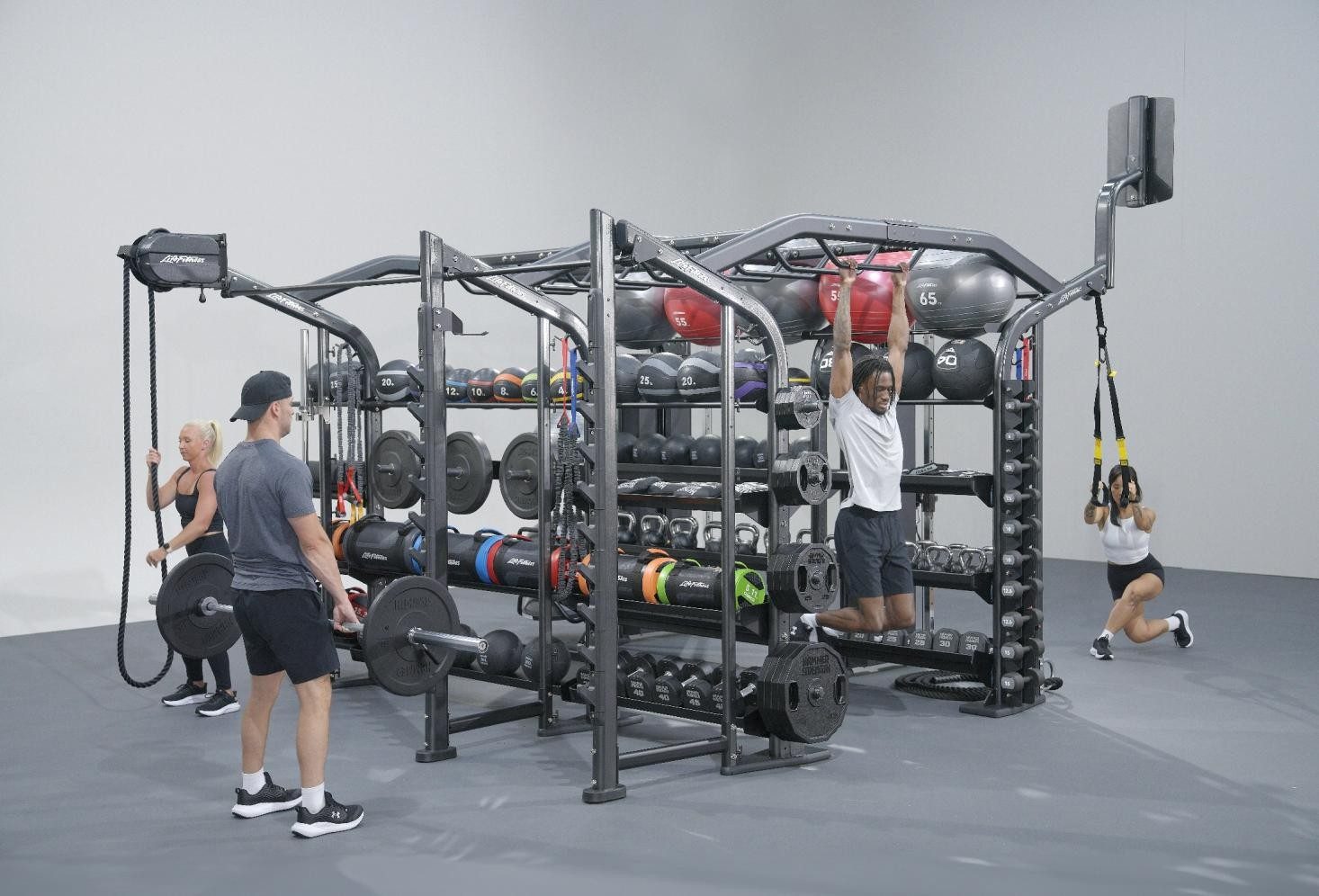
SYNRGY is a system that maximises space: it adapts to both a small studio and a large facility, and grows from one bay to an entire zone.
It is put together in four steps — CORE is the foundation, ADD extends it, SIDE adds storage at the side, and stabilisation takes care of facilities where the floor must not be drilled.
Rotational work on the frame itself — what is otherwise improvised with a bar in the corner.
Rope pulling without a separate lane, in line with the rest of the zone.
A built-in target for ball throws — not a mark on the wall.
Three questions settle ninety per cent of the decision: how much free wall you have, whether the floor can be drilled, and whether the middle of the room has to stay clear. The answers choose the system for you — before a single price list is opened.
The frame is the framework; the tools are what members actually hold. This is where things wear out the most and go missing the fastest, so it pays to take them from the same manufacturer — for purchasing and because the look matches.
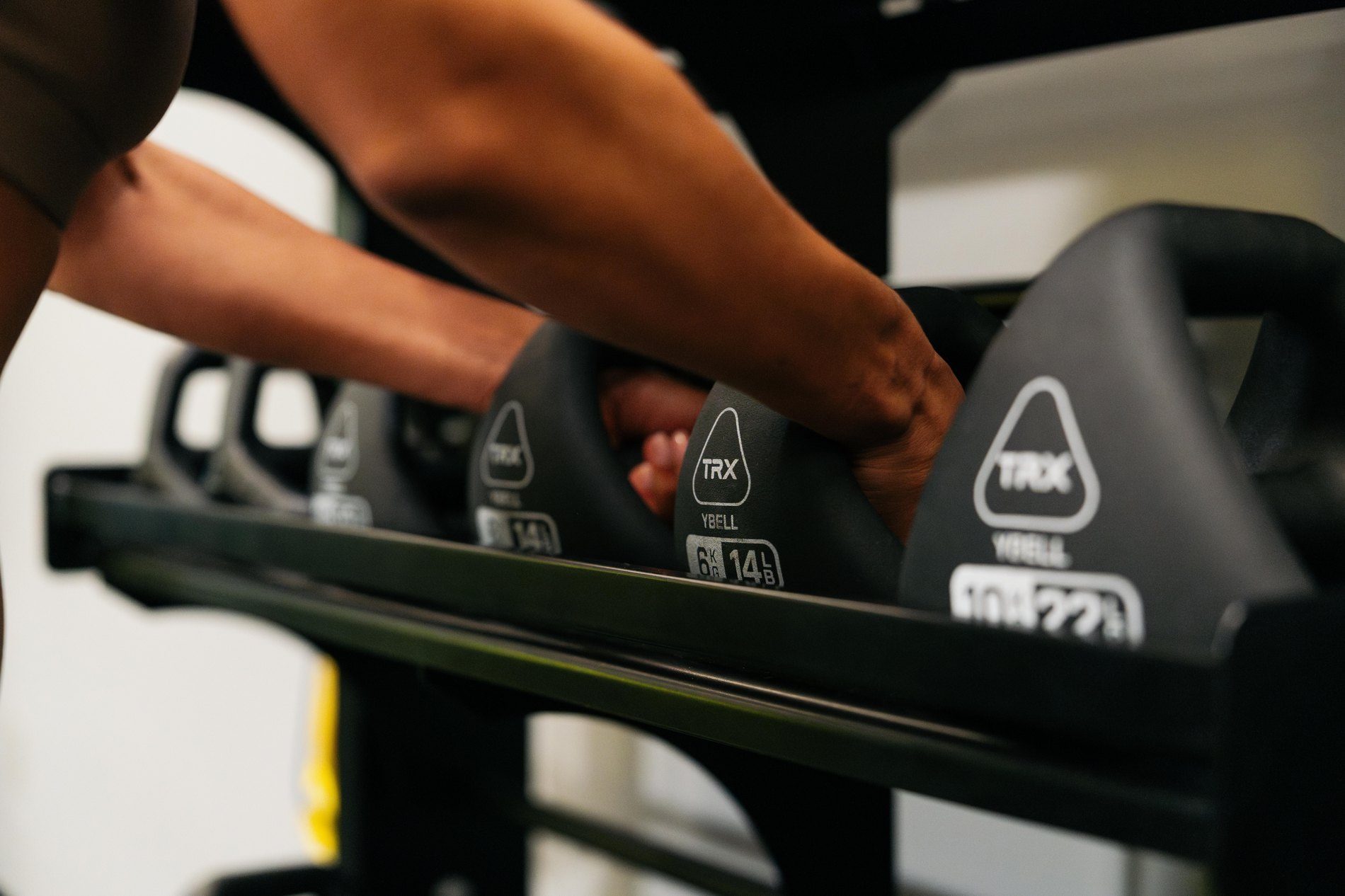
YBell is at once a dumbbell, kettlebell, double-grip medicine ball and push-up stand — you move from one to the next simply by changing grip.
In a zone where a square metre costs more than anywhere else, one rack of YBells replaces four sets of equipment and four racks.
A functional zone usually depends on the class timetable. A hybrid training zone does not — members have a race in the calendar and train for it months ahead, without anyone standing over them. We equip both official HYROX and affiliate clubs and any gym that wants to introduce that programme.
HYROX is a race run eight times over: a kilometre of running, then one functional station, and round again. Sled, rope, wall ball, sandbag, kettlebells, rowing and running — nothing a gym doesn't already have, just arranged in a format that is measured.
The brand we represent is Centr, and Centr is the official equipment supplier for HYROX. That means the gym gets the same equipment the race is run on — the non-motorised Perform Tread, Power Sled, Power Rope with markings every three metres, competition sandbags, wall balls, Octo kettlebells, rig targets and the Perform Turf track.
For a gym owner it is a rare case: a programme that creates its own reason to come. A member who has entered a race does not cancel their membership three months before it. We equip both clubs going for official HYROX status and those that simply want that style of training.
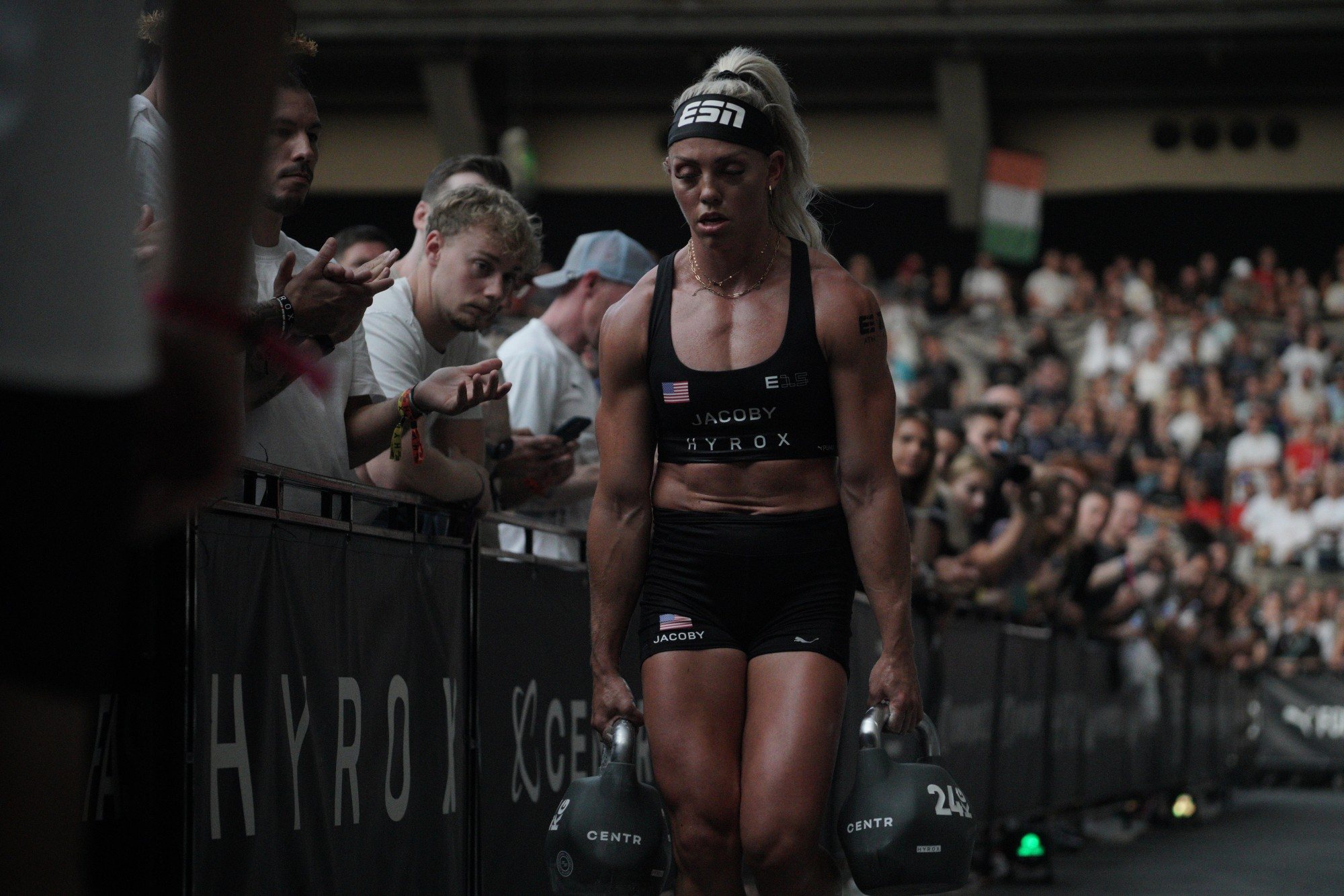
Since October 2026, Hybrid Racing has been recognised as a discipline within the World Triathlon family, and HYROX runs the official world, continental and national championships.
Ultimate is the classic HYROX, Fast is shorter and quicker, Ultra longer and more of an endurance test — all three under World Triathlon rules.
The 2025/26 season had over 1.5 million participants; 107 races and more than two million competitors have been announced for 2026/27.
We represent the Centr brand and sell its equipment. We do not organise races and do not represent the HYROX brand — we mention it because Centr is its official equipment supplier and because we equip clubs that train on that equipment.
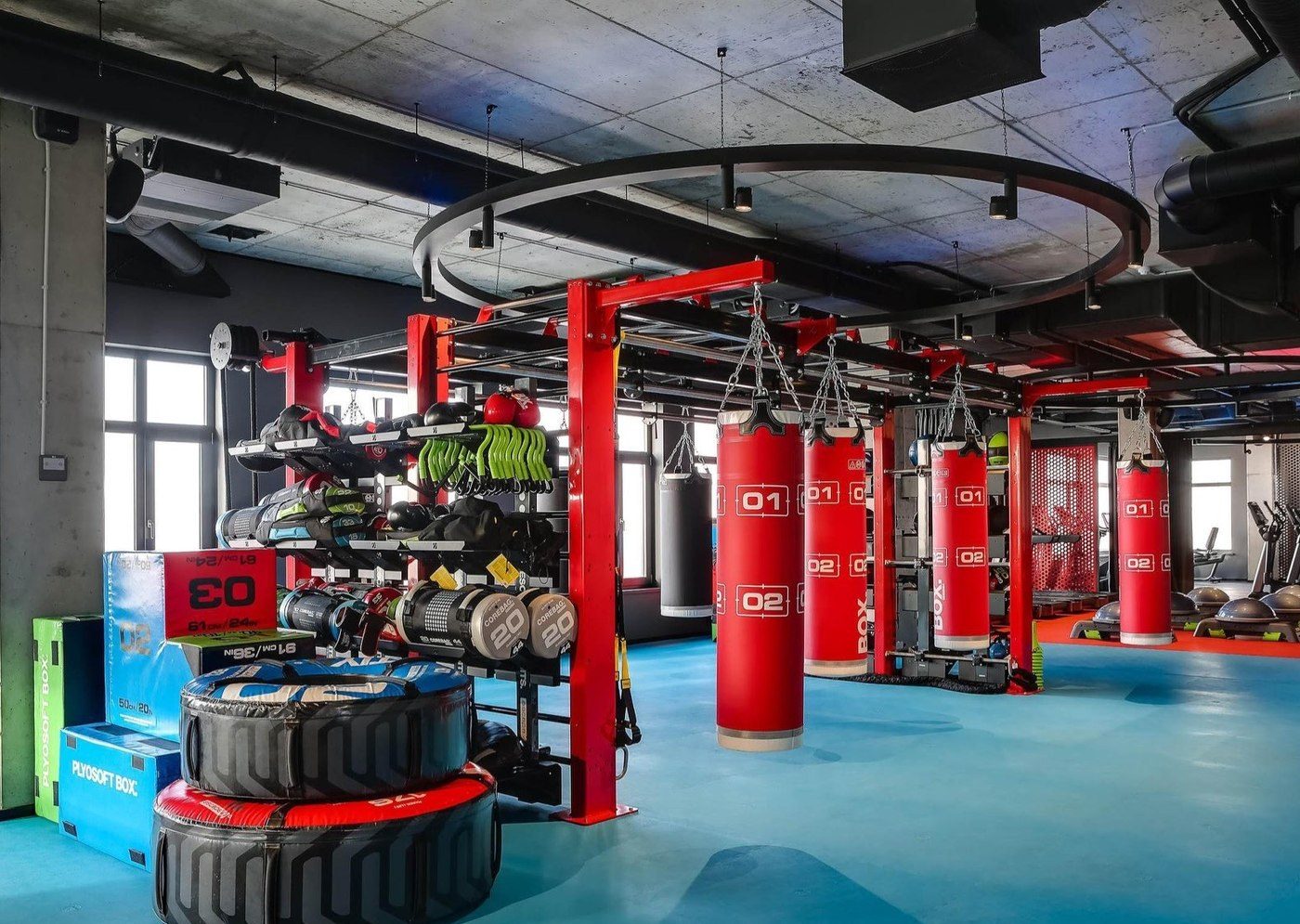
The functional zone has the hardest life of any part of the gym: things are thrown, dragged, jumped on and dropped on it. An ordinary floor lasts a few months.
That is why the floor goes in the same quote as the frame — a turf track for sleds and sprints, thicker rubber under the platforms, thinner where people only walk. Floor graphics also divide the zone without a single partition.
Functional equipment does not sell itself the way a treadmill does. If nobody runs a class and shows what each thing is for, members go back to what they know — and the zone turns into a space people walk through.
How many stations, how many people per station and how long a circuit lasts — that is planned with the floor plan, not afterwards.
If staff cannot explain the class, the class does not sell.
The functional zone is the only part of the gym where all three have to match. When they come from three suppliers, they rarely do.
Positions, clearances and circulation routes go into the drawing before anything is ordered.
Where anchoring is allowed, where a free-standing version is needed and how much load the floor takes.
Carrying in, assembly and handover of a zone that works, with instructions for staff.
Our own technicians, inland and on the coast.
The systems are modular — the zone is extended, not replaced.
Frame, tools, floor and programme on the same document.
TRX, Hammer Strength and Pavigym have their own pages — they explain where the brand comes from and what sets it apart.
Send us the floor plan or the dimensions of the space and tell us how many people the zone has to take. After a conversation we put together a proposal for the structure, a list of tools, the floor and the price — and an estimate of how many sessions a week the zone can sustain.
Request a quote