
A strength zone needs half the gym. TRX needs an anchor point and room for one person with arms outstretched — and the weight is whatever the user brought along.
TRX was created not in a laboratory but in the field — and it shows in every detail that has survived thirty years of use.
In the nineties Randy Hetrick, a US Navy SEAL, put together something from a jiu-jitsu belt and parachute webbing that could train the whole body — without a single machine and without anything that had to be carried along.
When the others in his unit started asking for one of their own, the thing got a name: Total Resistance eXercise. TRX.
Today TRX is more than straps. It covers the whole functional training zone — frames, storage, YBell, medicine balls, bags and ropes.
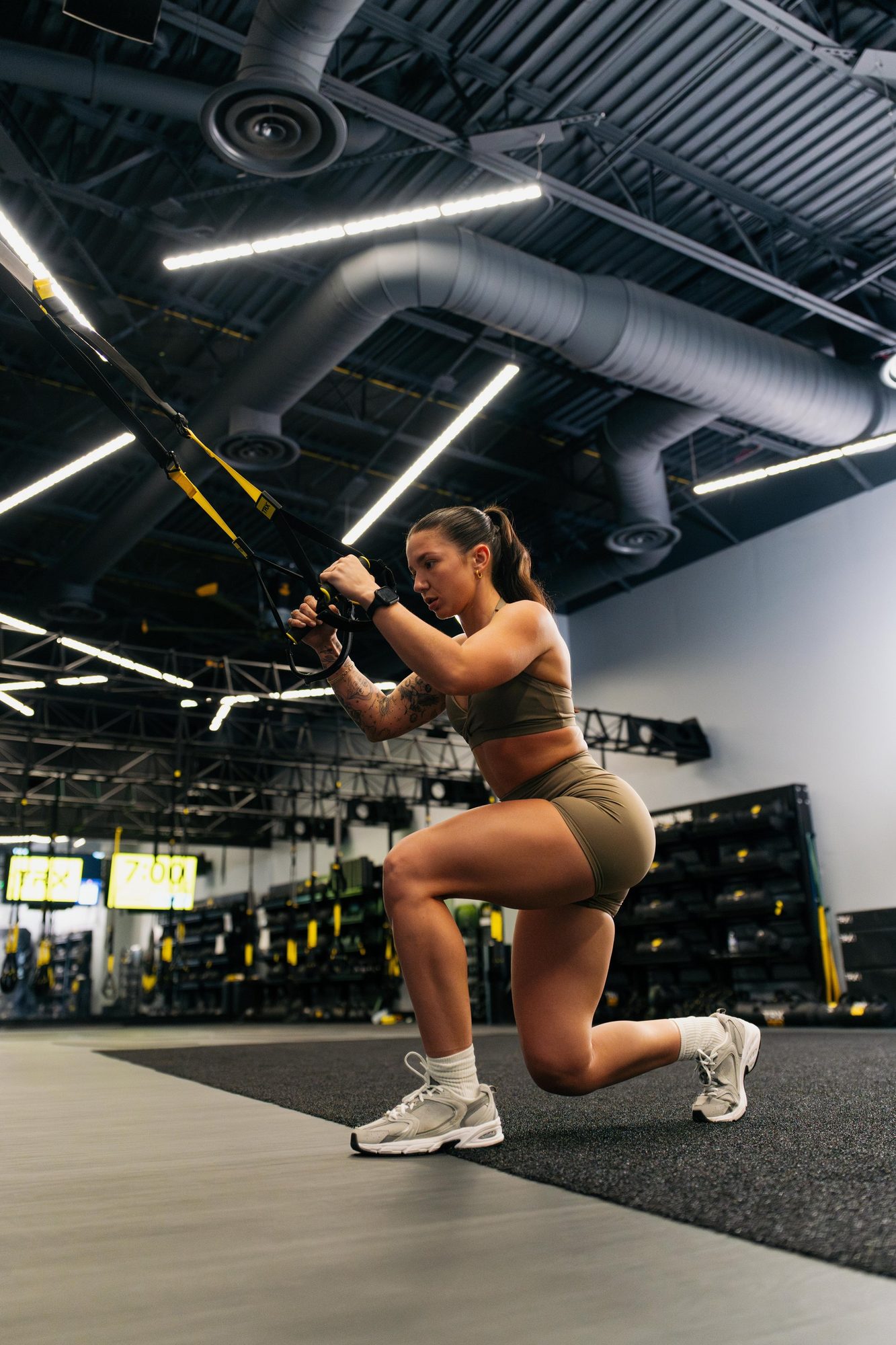
A piece of equipment that doesn't break down because there is nothing on it to break. A gym owner needs no explanation — a look at the cardio service bill is enough. The straps are replaced over time, but there is no motor, no electronics and no technician who has to come out.
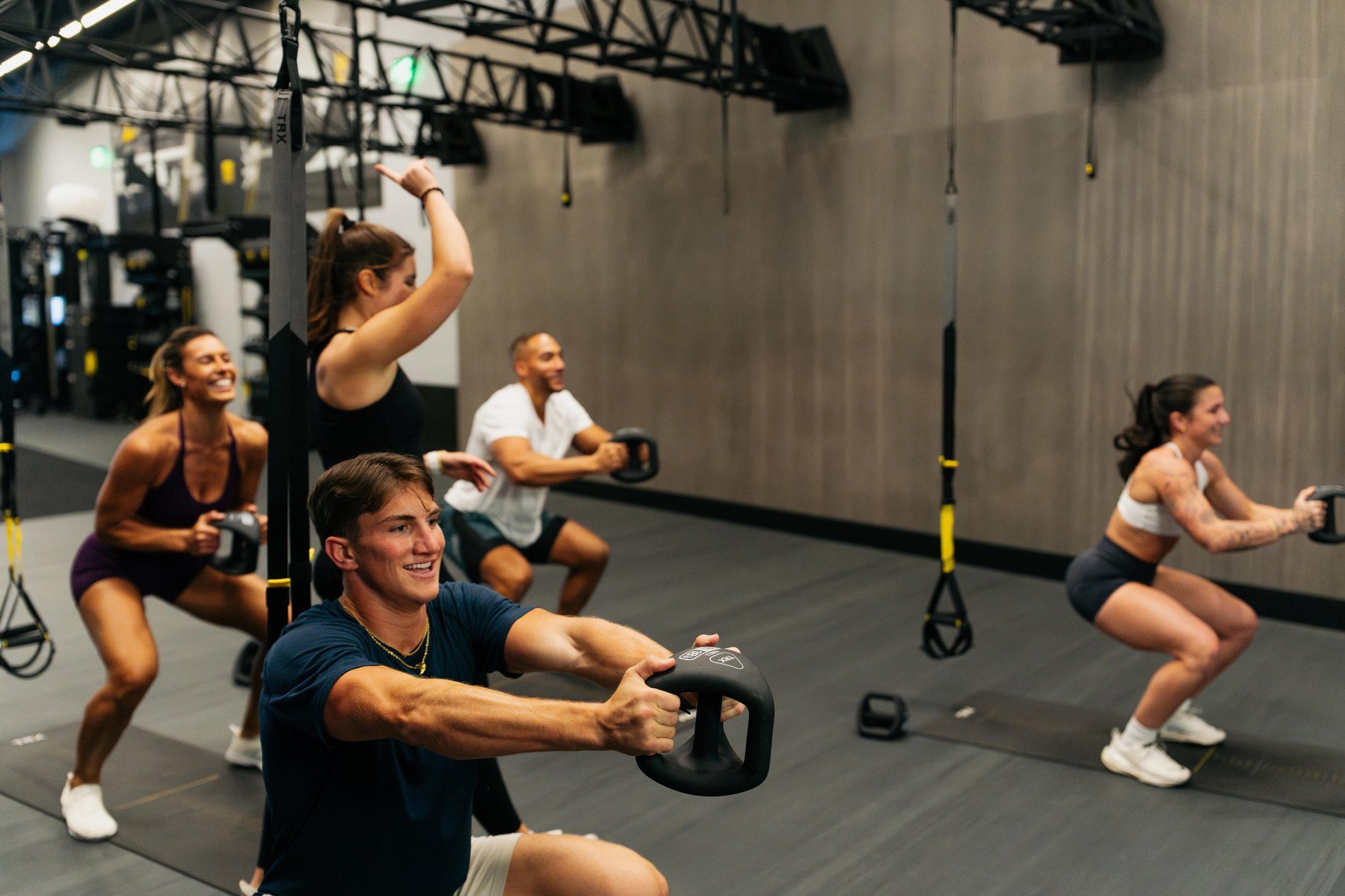
Every gym has a wall with nothing against it, a corner too narrow for a machine and a corridor that is only a passage. For TRX that is enough.
One anchor point and two metres of free floor, and you have a zone where one person trains — or, with a Studio Line frame, eight.
Studio Line is the commercial line of frames from which TRX straps are hung, with storage for the other tools. It is the difference between “we have a couple of TRXs” and a zone that looks like part of the project.
Which combination suits your space depends on ceiling height, wall construction and how many people have to train at once. We draw that into the floor plan before the order.
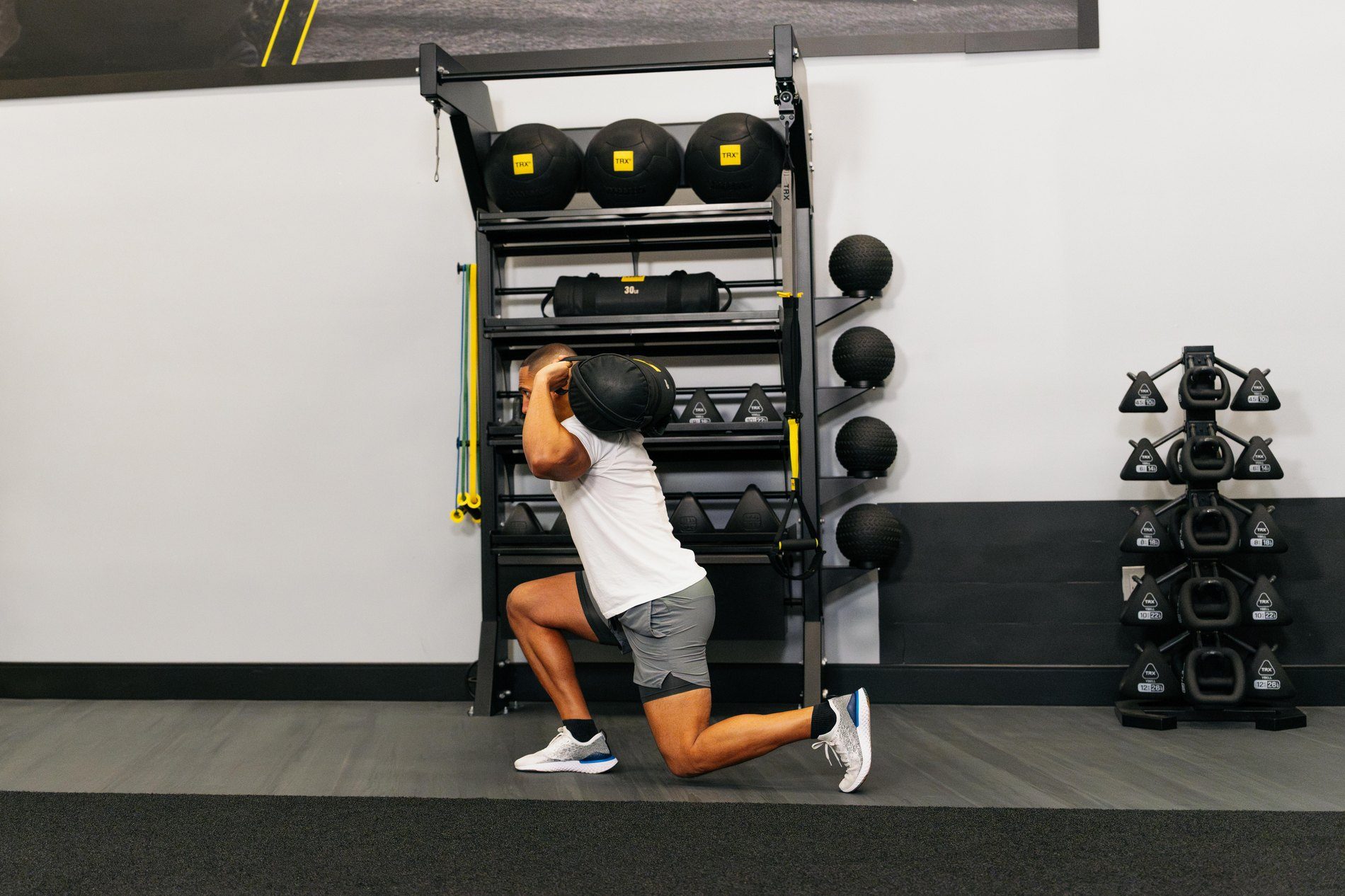
With TRX the anchor is the only structural element and the one thing that is never improvised. XMount is a steel anchor for wall or ceiling, made for commercial use. In hotels and buildings where the structure must not be touched, the free-standing version is used. This is not the place to economise — an anchor that gives way damages not the equipment but the person on it.
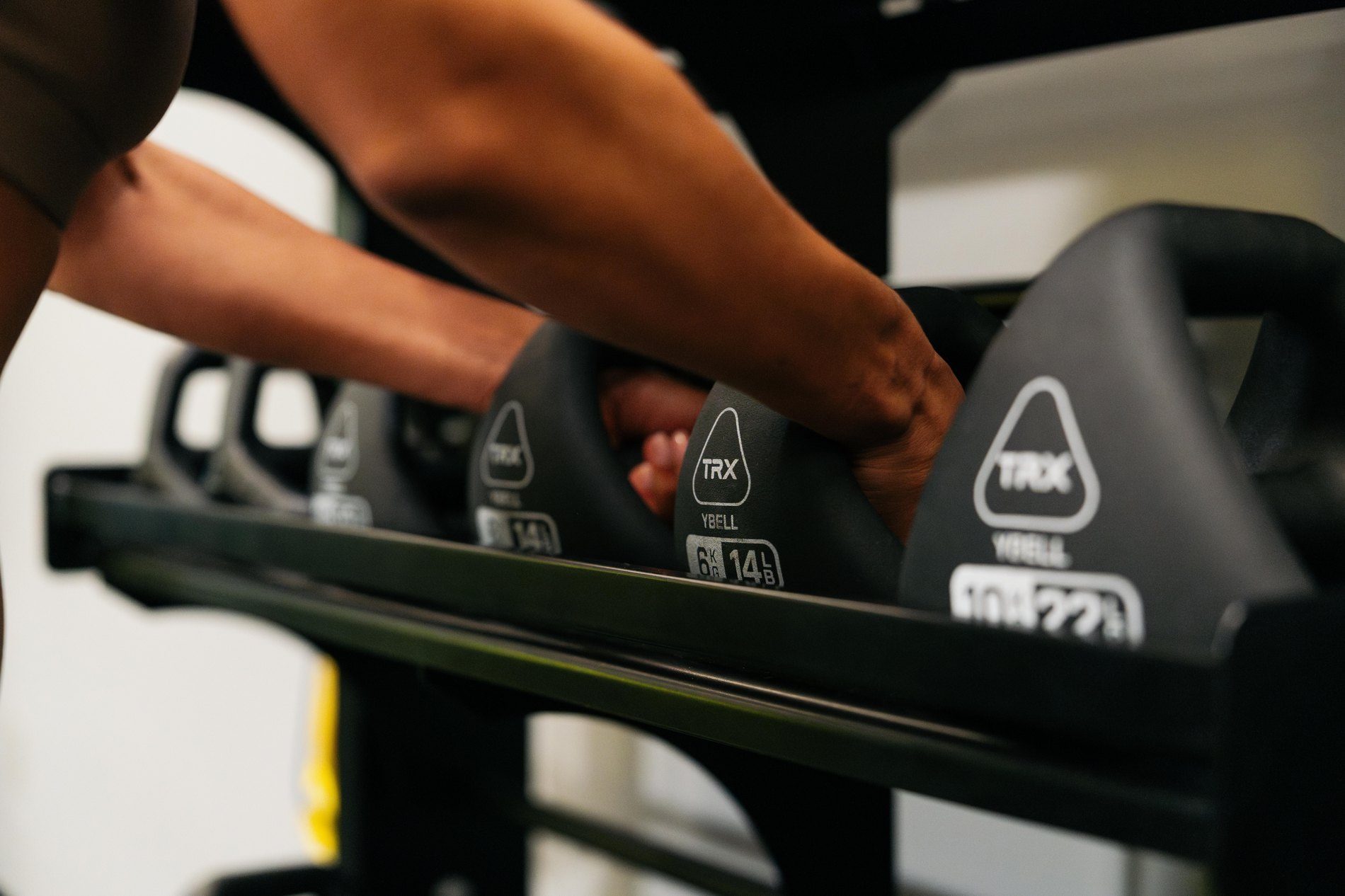
YBell is an Australian product that TRX acquired in June 2023. Today it is part of the TRX range, not a separate brand.
You move from one tool to the next simply by changing grip — no putting down, no second rack and no waiting for someone to move.
One rack of YBells replaces four sets of equipment and four racks. In a functional training zone, where a square metre costs more than anywhere else, that is a real saving of space.
The classic grip, for anything done with one or two hands.
A grip for swings and lifts, without a separate kettlebell in the room.
A two-handed grip for rotations, presses and partner work.
Placed on the floor it serves as a handle, with no additional tool.
Two series: NEO and Elite. We confirm the weight range for each series in the quote.
TRX now covers the whole functional training zone. When everything comes from one manufacturer, the look, the purchasing and the warranty all line up.
TRX is cheap to buy and easy to install badly. The difference lies in who draws the zone and who fits the anchor.
Equipment and original parts through the official channel, not grey imports.
The number of positions, anchor height and spacing go into the drawing before the order — they cannot be moved afterwards.
XMount is fitted to the manufacturer's instructions, not “somewhere in the wall”.
A functional training zone needs its own floor. We include Pavigym in the same quote.
TRX, machines and flooring on the same document and with the same installation date.
TRX is its backbone, but it rarely stands alone. See how it looks combined with flooring, machines and the rest of the gym.
Send us the floor plan or a photo of the space. After a conversation we put together a proposal for the zone with the number of positions, the type of anchoring and the price — and an estimate of how many people the zone can take at once.
Request a quote